
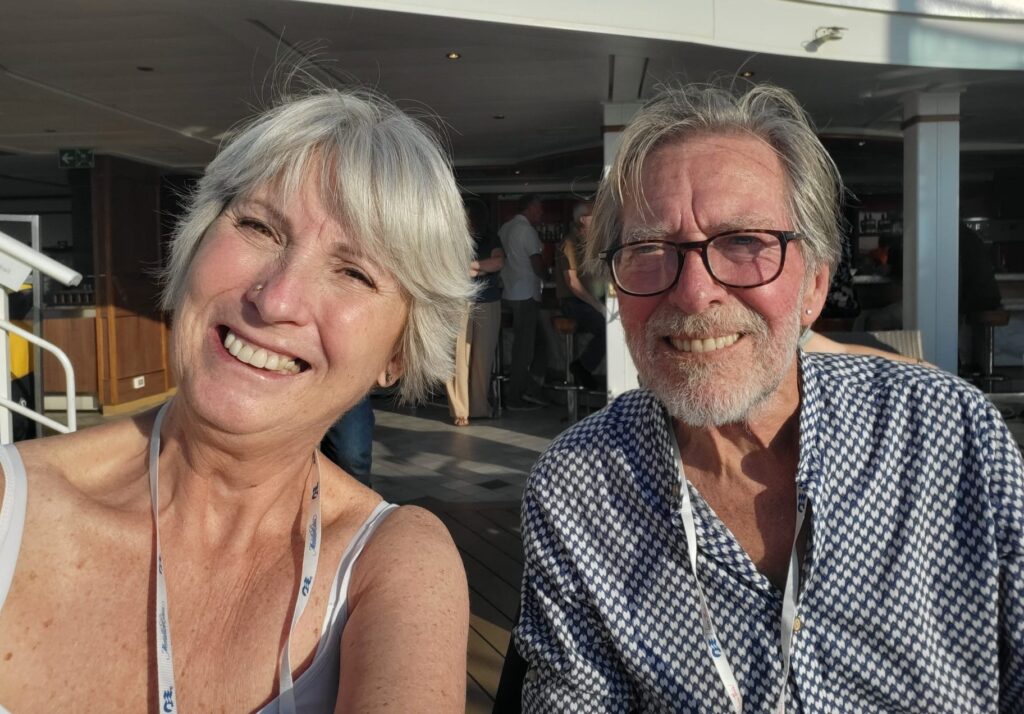
 Lisa’s husband Rob loved his job in our eBay team, researching high–value items that could be sold to raise money for our care.
After Rob was diagnosed with melanoma skin cancer in 2025, he and Lisa were supported by our Willen at Home team until Rob died in March this year.
Lisa has also been attending our recently bereaved drop-in sessions to talk to other local people experiencing grief.
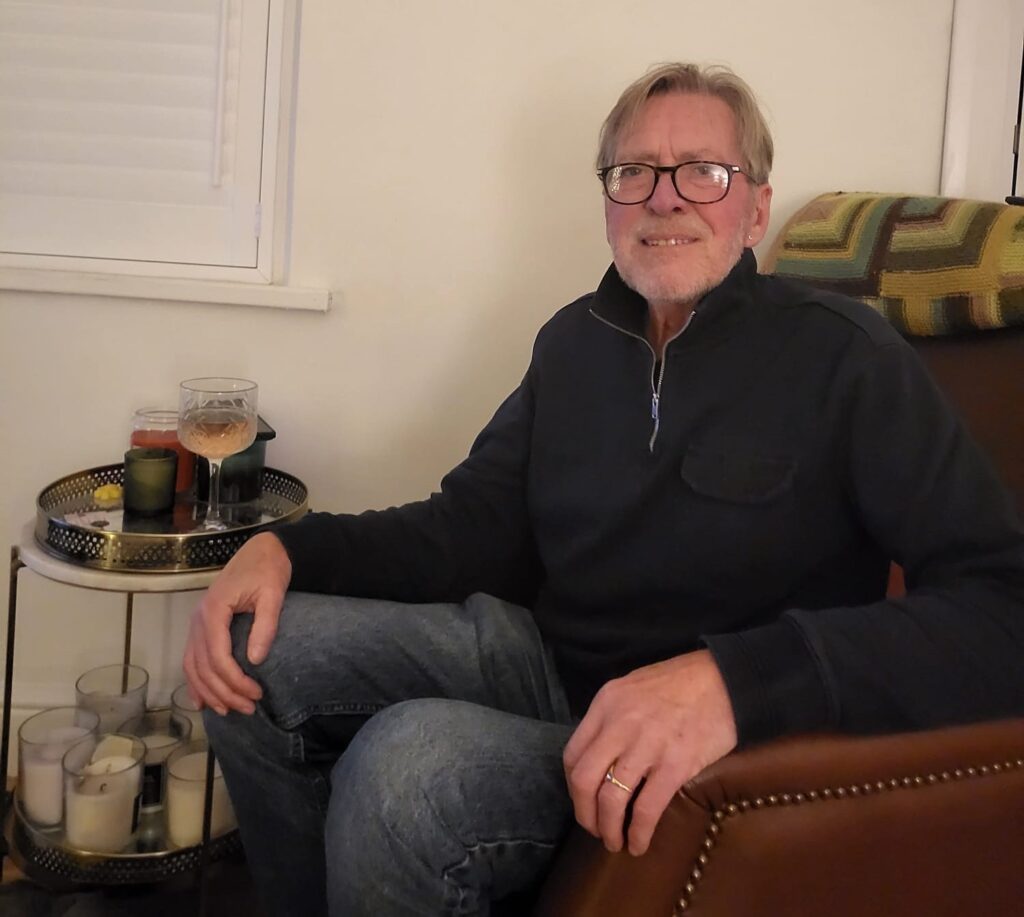
In about 1993 I went for a job interview at a publisher in London where my friend worked. The interview was with Rob. I said to my friend afterwards, “You didn’t tell me your boss was so handsome!” I got the job. There were lots of work drinks in those days, so Rob and I got to know each other. I was married at the time and so was he.
Rob was quite shy, but he would talk to anyone. He was intelligent and knew loads of general knowledge. He loved the news. And he loved a cigarette and a glass of wine.
Life moves on
Over the years he was married twice and had five sons. I did think about him, but life moved on and I had a son from my marriage, and then other relationships later on. I always stayed a ‘Miss’ but I didn’t miss much! There was a point where Rob and I were both single and we tried being together, but it didn’t work out.
“He used to say I was his soulmate. And he was mine.”
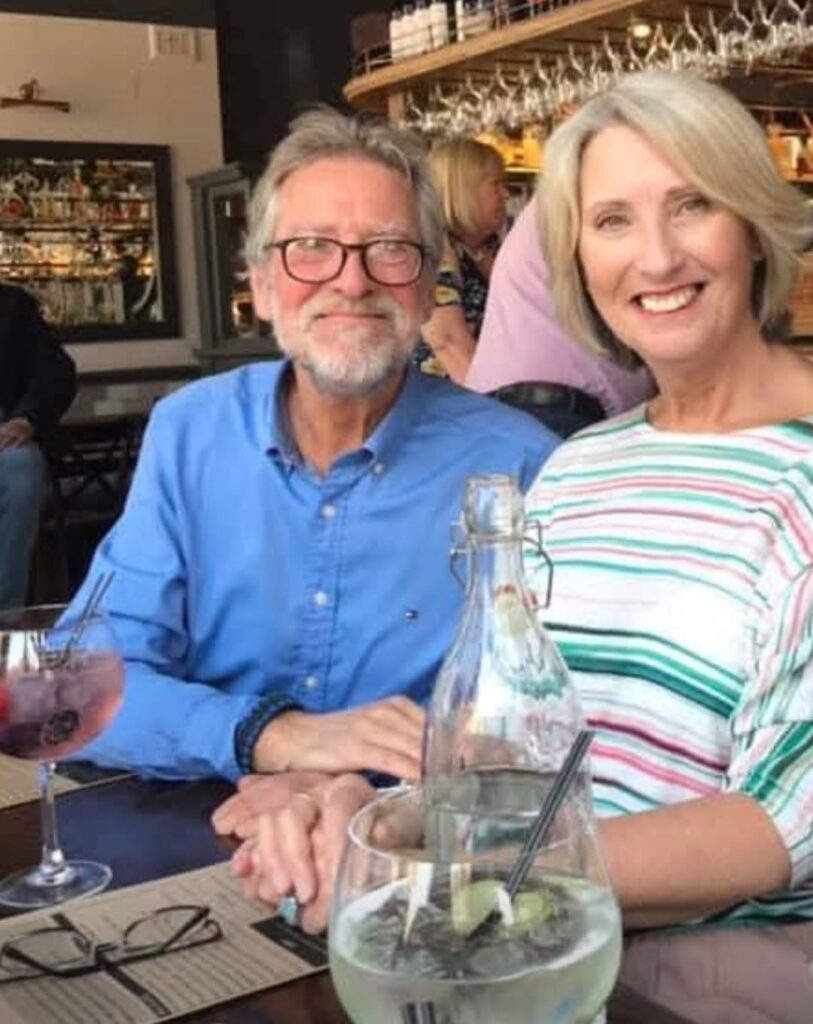
In about 2016 he found me on Facebook. We had a chat and then we met for dinner. Two years later we moved in together in the February and got married in the June! He used to say I was his soulmate. And he was mine.
Proud to work for the Hospice
Rob was made redundant later in life and he got into selling things on eBay. Around the time that we got together, a job came up at Willen Hospice working for their eBay team. It just all fell into place. He really knew his stuff. He’d get home and tell me about all the items that had come in that day.
He absolutely loved the job and the people he worked with. He liked to know that he was doing his bit, as well. I think he would have done it even if he didn’t get paid. When we went down the high street in Stony, he’d always go into the Willen shops to chat with everyone and tell them he worked for Willen too!
“He absolutely loved the job… I think he would have done it even if he didn’t get paid.”
 Getting diagnosed
It was only last summer that Rob discovered a lump in his groin. He went to the doctors and then had scans at Milton Keynes Hospital. They did a biopsy and found out it was melanoma. By December they said it was stage four. The cancer had travelled up his body and was in his brain.
He had his first immunotherapy treatment on Christmas Eve. But the cancer was rampant and was in his lungs too. The doctors said there was no more they could do for him. So on 23 February, we came out of hospital and we thought we had him back for three months or so. We only had three weeks. But I was so glad he came home.
We always knew we’d be referred to Willen. We said we wanted that.
Confidence in Willen
When we left the hospital, they didn’t give us any steroids, and he needed five a day at that time. So I phoned the Willen at Home team, as they were due to be visiting. I spoke to a nurse called Anita. I told her Rob needed the steroids by 2pm. Anita did a prescription there and then, and I went to the chemist to get them. She said she’d come round and help me check I wasn’t getting mixed up.
“Willen are always on the end of the phone.”
Rob had so much medication and I thought I was going to kill him by getting it wrong. But Willen are always on the end of the phone. They phone you every day or every other day to see how you’re coping.
I absolutely felt confident in Willen and so did Rob. When he wasn’t eating, they were round straight away. And when he couldn’t take his tablets, they came to fit a syringe driver instead. There wasn’t one nurse that didn’t listen. They all listened. As soon as the nurses knew that Rob worked for Willen, they’d be chatting to him about it, and that brightened his day.
 A privilege to care
When the doctors told me Rob wanted to die at home, I really thought, I can’t do this. Rob had a special bed in the living room and I was sleeping on the sofa to be near him. I was doing a lot and I was getting tired because he would be up in the night wanting the toilet. I couldn’t lift him. I had to get him onto the walking frame.
“I realised it was a privilege to look after him in those last weeks.”
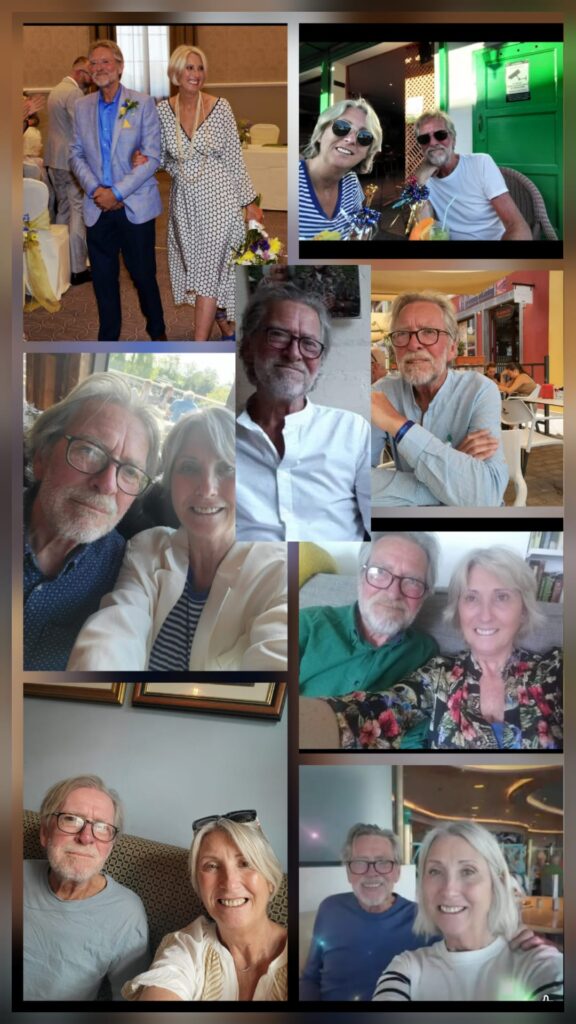
People used to say to me, “I don’t know how you’re doing it.” But you do it. I had to find a way for me. And I realised it was a privilege to look after him in those last weeks. Once I hit on the word ‘privilege’, that changed me completely. It stopped me thinking about the things I couldn’t do during that time. Anybody who thinks they can’t look after a loved one at home, they can.
Local support
A few months after Rob died, I went to the Hospice’s recently bereaved drop-in session. I really got a lot out of it because my mum died in that time too. The people there knew it was my first time. I just felt like I had a warm blanket over me. They were so welcoming. It’s nice to meet people in the same room, all in the same boat, who will listen.
“It’s nice to meet people in the same room, all in the same boat, who will listen.”
The hardest thing is walking through the door that first time. You don’t know what you’re going into, what it’s going to be like and what feelings it’s going to stir up for you. So even just getting in the car to go was really hard. But after that, you know who’s there and you know what it’s going to be like. I’ve definitely found it really beneficial.


